
Sadly, when you walk beyond where the daily clean up happens on Shela beach, you'll begin to find bottles and wrappers before you find shells. They wash in daily from across the Indian Ocean. Over the world, this would remain rubbish littering the environment, but in Lamu, thanks to community efforts, a lot of that waste becomes something brand new.
The Flipflopi Project started with the simple idea to build a dhow — the traditional sailing vessel of this coastline — entirely from recycled plastic collected from Kenyan beaches. In Lamu, they found boatbuilders able to apply their craft to a new material. The resulting dhow, Ndogo, sailed the coast as a protest against ocean plastic and proof that the region's waste could be turned into something useful.
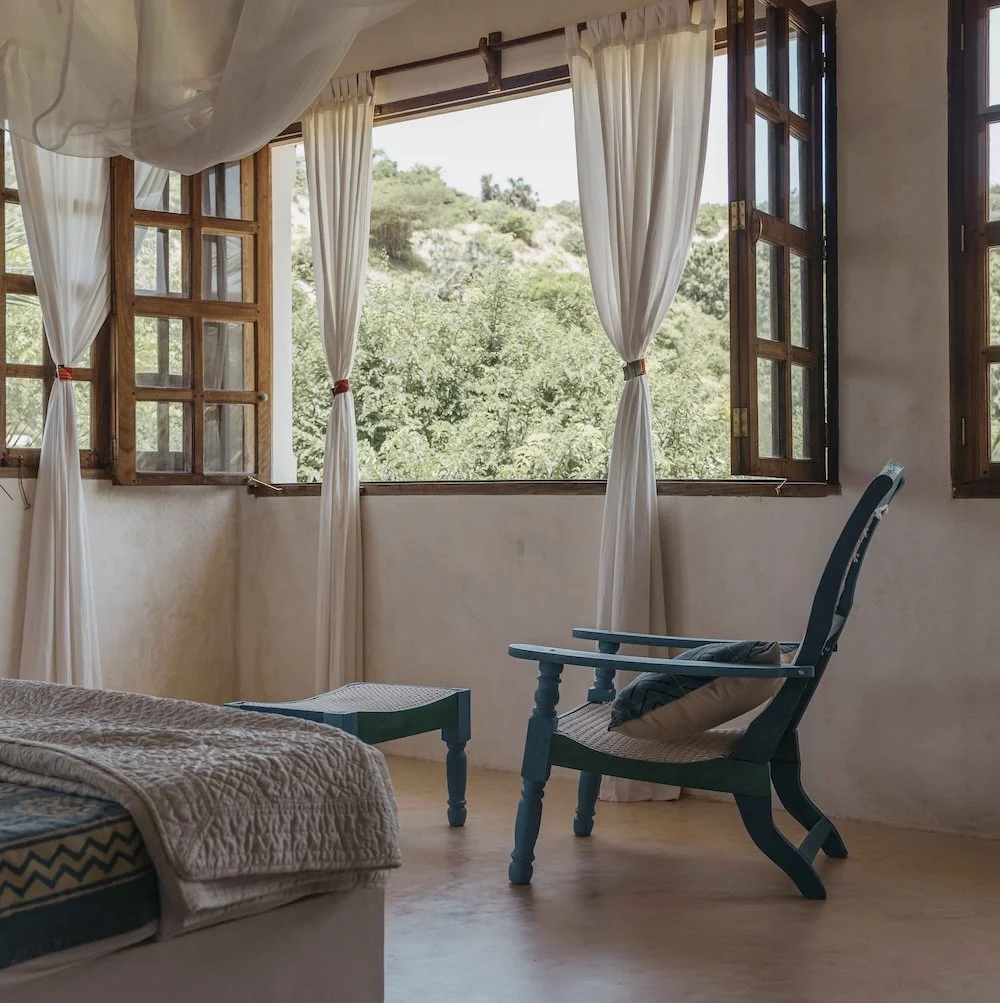
That project grew into a wider circular economy effort, collecting and recycling waste plastic from across Lamu's beaches. Alongside boats, the team now reimagine Swahili furniture with the same material — Flipflopi Designs works with skilled local craftsmen to create vibrant, durable furniture out of what would otherwise be rubbish.
Why It's at Mbibo
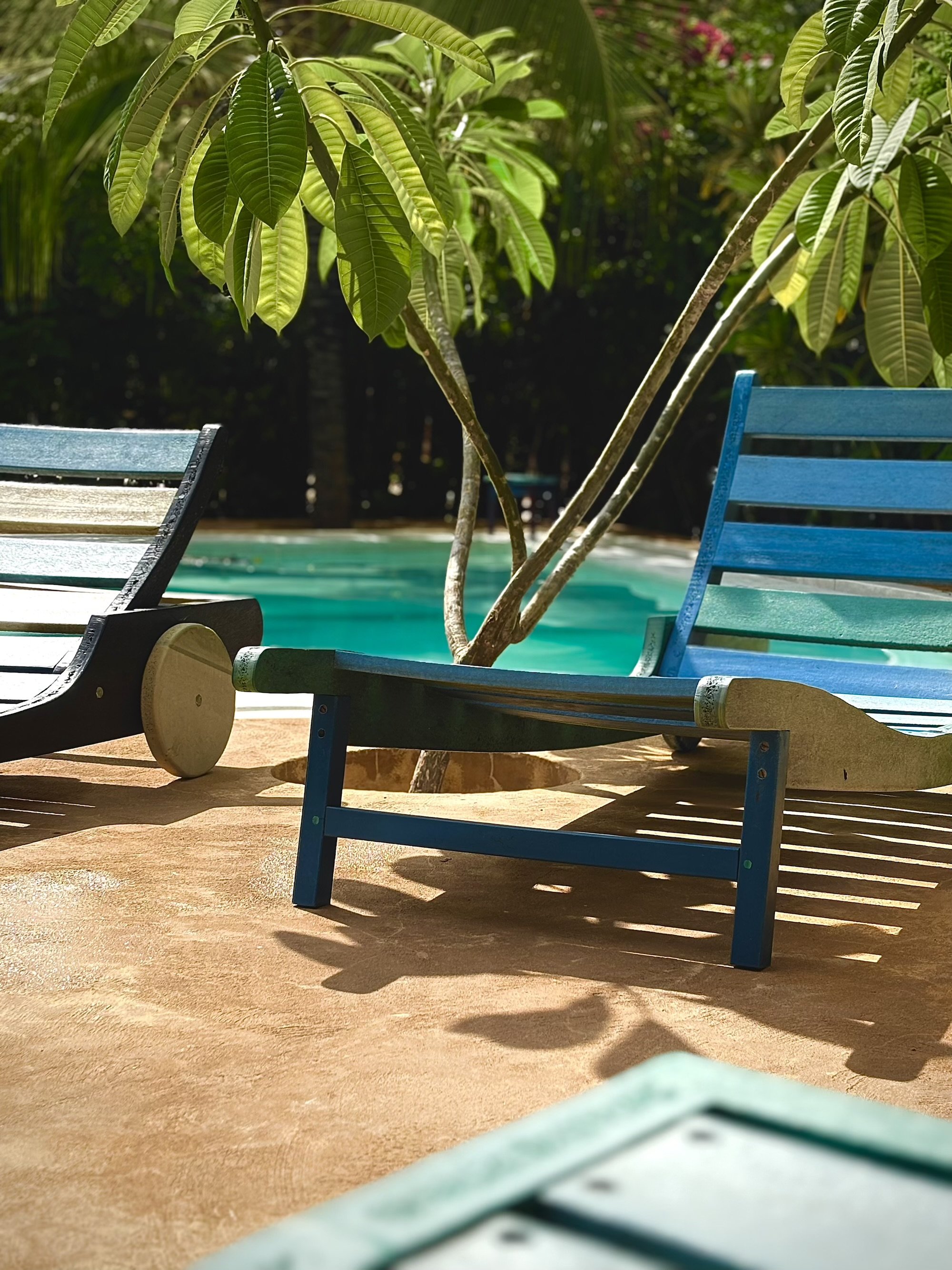
At Mbibo you'll find a handful of these pieces — our colourful sunbeds, the dining table, the desk and chair. We chose them because we know they'll last. The relentless sun, salty air, and monsoon showers that are part and parcel of Lamu's environment mean furniture has to work hard to last around here, and recycled plastic — one of the most durable materials ever created — holds up to all of it.
When we built Mbibo, we wanted something that lasted while staying sympathetic to its surroundings. That runs through the whole house — 100% solar power, considered materials, nothing that needs replacing every season — and it carries through to the furniture too.
Plastic Pollution Is Bigger Than One Beach
Lamu has no functioning waste management system. What washes up doesn't get collected and processed the way it might elsewhere — it's left to individuals, community groups, and a handful of local non-profits to deal with. It's part of a much larger problem: plastic pollution doesn't respect borders, and much of what lands on Shela's beach has drifted from far beyond Kenya.
We do what we can on our end — reducing packaging where we can, composting, buying in bulk rather than single-use — but we're the first to admit it's not enough on its own. That's why supporting initiatives like Flipflopi matters to us. It's one of a number of local, often non-profit-driven projects doing the harder work of turning Lamu's waste problem into something else entirely.
Supporting Local, Always
Supporting local artisans and innovation runs through everything at Mbibo. You'll see it in the artwork and decoration, much of it sourced from Lamu's own homeware shops, and in the furniture too. Lamu's economy leans heavily on tourism and artisanal skill — carving, weaving, boatbuilding — and buying from Flipflopi Designs keeps that skill in use, just applied to a newer material.
It helps, too, that the pieces are well made and genuinely striking. Choosing the sustainable option here has never felt like a compromise.
Come and See
We can arrange a visit to the Flipflopi site to see how the furniture is made, if you'd like to see it firsthand. Book a stay with us to come and find these pieces in person.
