
There's no alarm that wakes you at Mbibo — you’re on holiday after all. What does stir you may be the birds starting their chorus in the garden, the distant call to Fajr drifting over the dunes, or the first rays of sunlight creeping in through the curtains. However it happens, mornings here feel less like a start and more like a gentle nudge into action.
Today, I’m sharing what a day staying in Lamu at Mbibo looks and feels like — beyond the highlight reel.
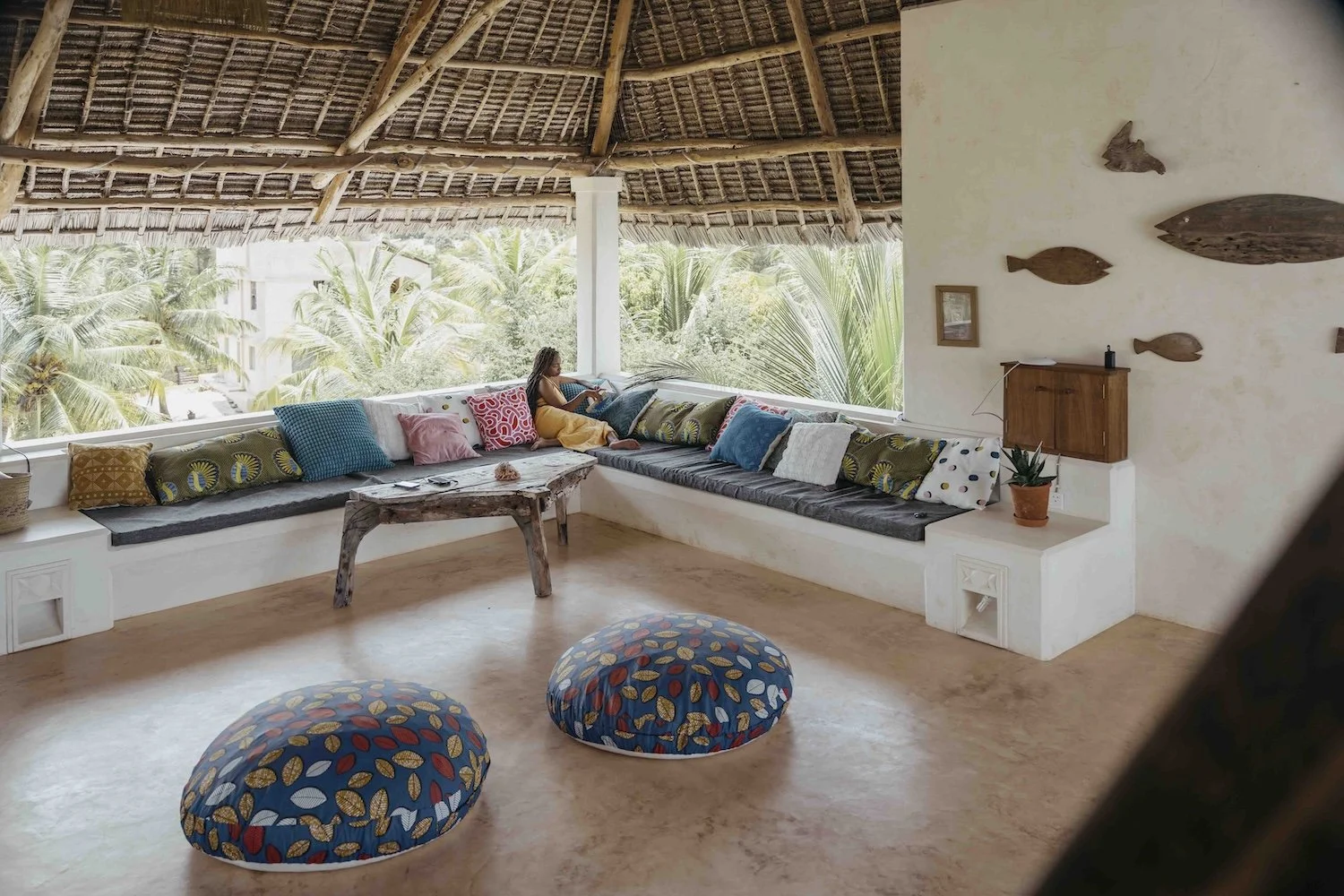
A view on our rooftop, where you can relax and enjoy at all times of day.
First Light: Before the Heat Takes Hold
The rooftop at Mbibo Lamu belongs to the early risers. One of my favourite things is to watch how the sun rises up over the village in the distance washing the island with oranges and pinks. It’s also a slice of time that’s wholly yours, offering you the opportunity to sit in stillness watching out for the many tropical birds we have visiting our garden at this hour.
Some guests roll out a yoga mat up here. Others just stand with a coffee and stare. Lawrence, our in-house chef, will have the kitchen moving by now, so you know your tummy is about to be full. You can discuss with him the night before what you'd like for breakfast and it'll be waiting when you come down.
The beach is a fifteen-minute walk over the dunes. It's worth doing early, before the sun rises too high. Wear sandals as the sand can get hot very fast, but don't rush the walk. This is the time when you can have the 12km stretch of Shela beach all to yourself — with maybe a few donkeys too.
Morning: Water and Wandering
By mid-morning, the sun is up and beating into the garden, but we still have spots of shade under our magnificent Mbibo (Cashew) tree. The pool sits cool and quiet, still mostly in shade.
This is a great time to grab a coffee, a good book, and lounge around in the shade on one of our recycled plastic sunbeds crafted by The Flipflopi Project.
For those who want to explore a bit more, a twelve-minute walk through the village brings you to Shela's seafront and the beach beyond. The village is a maze of coral stone and narrow passages. I recommend you ask one of the team to point you in the right direction the first time, otherwise you may end up somewhere you didn't expect, which isn't always a bad thing.
If you want to get to Lamu Town, it’s a short boat ride. It's worth going with a guide your first time — the waterfront can be overwhelming without someone to navigate the welcome, and you'll see far more with a local alongside you. I’m always happy to arrange this with my tried and tested guides.
Midday: The Art of Doing Nothing
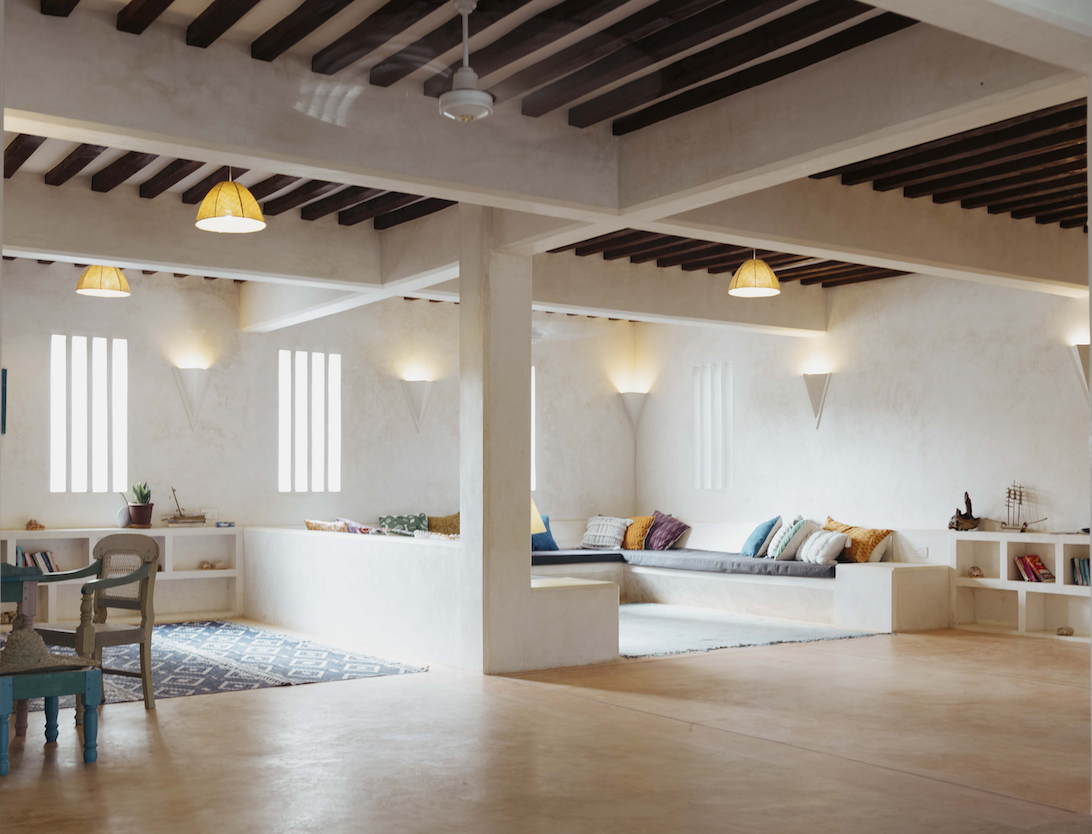
Our light and airy downstairs lounge.
There's a reason the island slows between noon and three. The sun is uncompromising, the air is heavy, and the only sensible response is to surrender to the heat.
This is nap time. Pool time. Lie-in-the-shade-and-read time.
The house is built to breathe — traditional materials and design mean the rooms stay cool even when the heat outside feels impossible. Overhead fans do the rest of the job. Eunice will have been through the house in the morning, so your room will be freshly cleaned and in order by the time you retreat indoors.
The coolest part of the house is the lounge downstairs, with its large baraza filled with cushions. It’s the perfect place to sneak in a quick nap.
Lawrence is on hand for lunch too — it's worth having a conversation early in your stay about what you love, what you don't, and what you want to try. He's good at reading what people need. One of our guests’ favourite lighter lunches is fresh mango salad with samosas hand wrapped by the wonderful ladies at Shela Women’s Association.
Late Afternoon: When Things Come Back to Life
Somewhere around four, Lamu cools off. The breeze picks back up, and the desire to get back outside returns.
This is another good time to walk on the beach without squinting and enjoy a swim in the Indian Ocean. Or you could enjoy an afternoon cocktail watching the constant stream of boats crossing the channel. Otherwise, you simply stay put and enjoy as the garden starts to stir again.
If you've arranged a sunset sail — which is a must — this is when you head to the water. Even after all these years in Lamu and countless sunset sails, I never pass up an opportunity to be on the water at this time of day. No two sunsets are the same, the sky always paints the most beautiful pictures and there’s something timeless about floating through mangrove channels on a handmade boat that just never ever gets old.
A trusted boat captain is something I include in my Lamu guide, which I share with every guest. It's always better to go with someone recommended not just for safety, but because they’ve been vetted for the best experience on board, from the banter to the snacks provided.
Sunset: The Roof Belongs to Everyone
If you’ve not ventured out on a dhow you can always catch a magical sunset on the rooftop. The sky here puts on a show. Pinks, deep oranges, the kind of colours that make you reach for your phone even though you know it won’t fully capture the moment.
I have a million sunset photos on my phone and I've trained myself to put it away — it never quite captures it anyway. The rooftop is the perfect place to watch day roll into night. This often looks like conversations so deep that you barely notice the light slipping away. Plus, if you’re staying with us around Full Moon, you’ll get to see an incredible moonrise view from up there too.
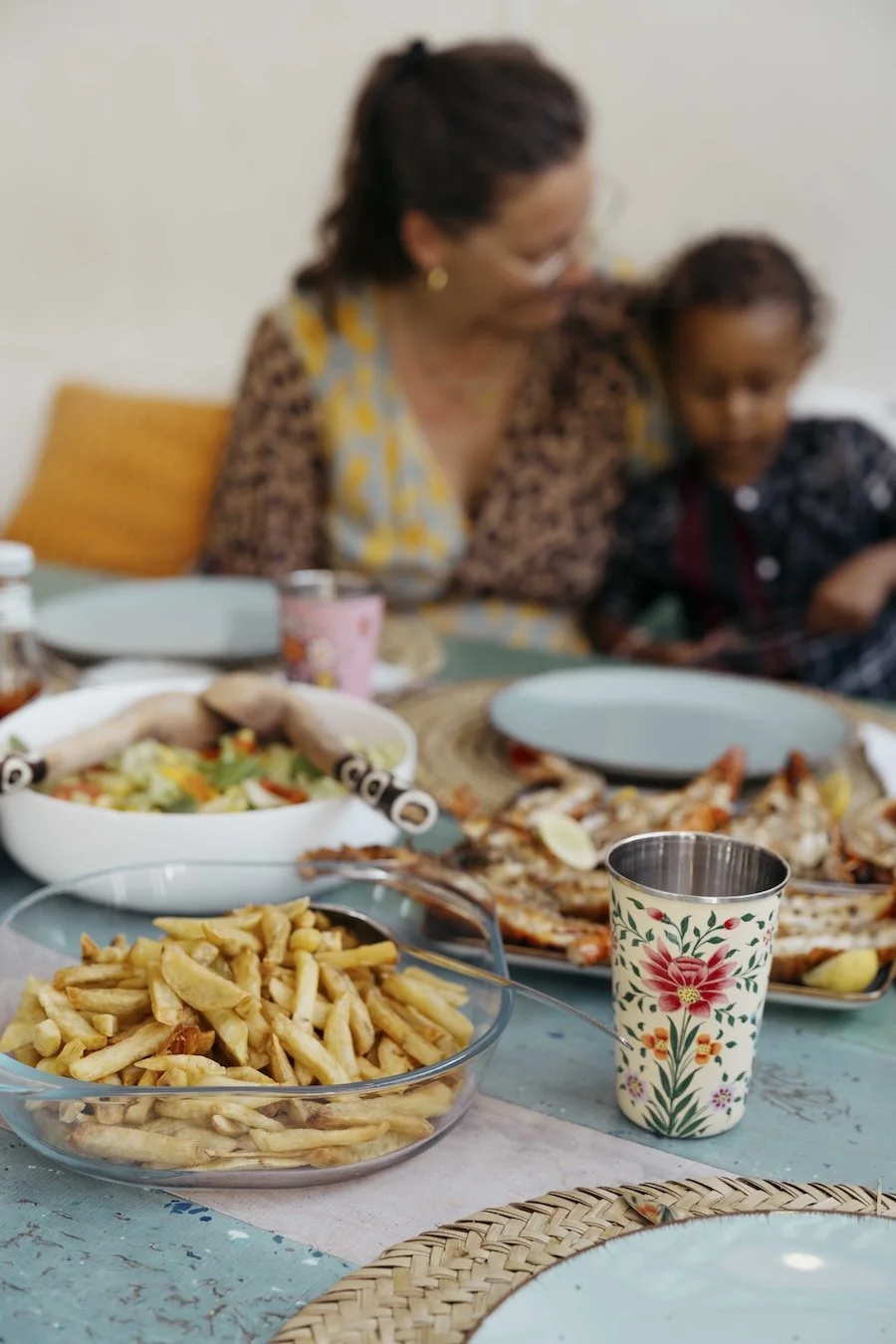
Freshly prepared lobster, salad and chips from Chef Lawrence.
Evening: When Lawrence Takes Over
After dark, Mbibo Lamu is lit by low light. The sounds of the island fades over the dunes and there’s a quiet that settles in.
Dinner is unhurried. Lawrence cooks from fresh seasonal ingredients, and meals here tend to stretch into the night because there's no reason to rush. Myself and all the guests absolutely love Lawrence’s ginger crab — so much so that the majority of our Airbnb reviews mention it. This is a dish that is a must as long as Lamu’s fishers have been able to source the crabs that is.
The evening stretches as it wants to. Some guests stay to play games or drift back to the roof with a drink, while others (like me) are asleep by nine, because living life at a slower pace allows you to reconnect to what you really need, and in our busy world, that is often a good night's sleep!
Our askari and trusted dogs are on-site through the night, so the house is secure and quiet. If you want to walk through the village after dark, the askari can walk with you. The village takes on a different shape at night and it can become even easier to become lost.
What a Day Here Actually Teaches You
Most guests arrive with some urgency, a leftover habit from life off Lamu Island. Staying here doesn’t force you to slow down, but it definitely helps you to see that the good things don’t require force or control.
When you can relax into the way time moves in Lamu, days stop feeling like something to be doing but something you can be living. Staying here allows you to stop watching the clock and start watching the light.
For me, staying and living in Lamu has taught me to slow down, stop trying to control every outcome and allow for the unexpected to arise. I no longer push and pull with time because I’ve learnt — especially in this climate — it’s a sure way to get hot and bothered. I built Mbibo to share a little bit of that ethos with everyone who comes to stay. You can think of Mbibo as a sanctuary, away from the hustle of everyday life and even away from the noise of Shela village, this space is for you to enjoy and relax.
That's the day at Mbibo, more or less. But every stay finds its own shape. That's kind of the point.
If you're thinking about where to stay in Lamu, Mbibo sleeps up to eight guests across four en-suite bedrooms. We include daily housekeeping, an in-house chef, filtered water, solar power, and everything else you need to properly switch off. For availability and enquiries, email stay@mbibolamu.com or plan your stay here.
